
Diesel versus Gas
Your annual hours settle this, not the argument at the ramp. Here is where each one earns its place, and what we would put on your hull.
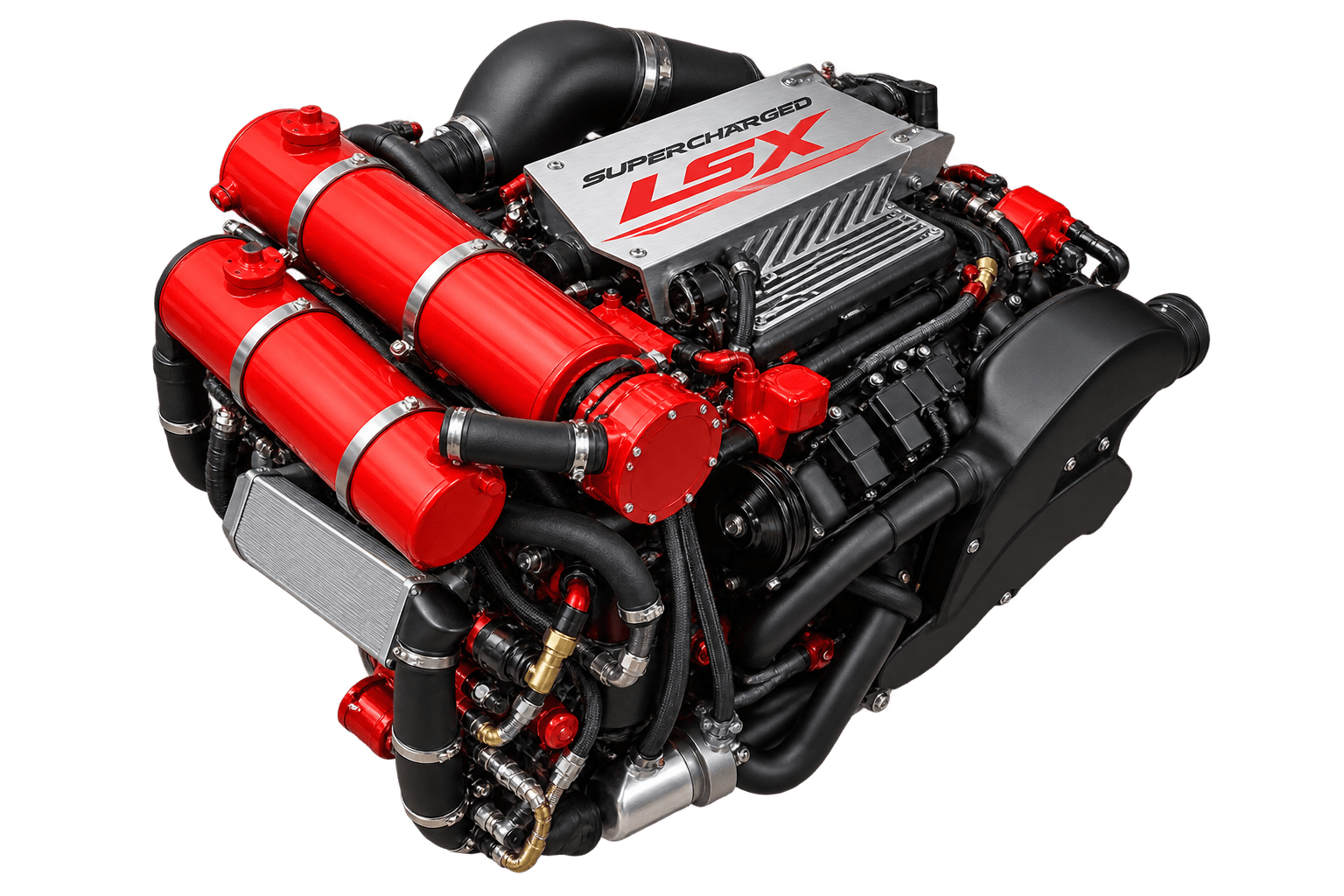
Run gas unless the boat works for a living.
Hunting and pleasure boats run a season, not a shift. Gas costs less, weighs less, and makes more peak power.
Diesel pays off on patrol, flood response and marsh work, where fuel and rebuild intervals land on a budget somebody has to defend.
How many hours a year do you actually run?
Use last season’s real hours, not the hours you meant to run.
120hours a year
Gas
A boat at this usage will not run the hours it takes to earn back the diesel premium before you sell it. Put the difference into the hull, the prop and the rigging you touch every trip.
Three gas, one diesel, all tuned in our shop
665HP
Big hulls and heavy loads. The most power we build.
525HP
The all-round hunting and fishing build.
525HP
Lighter rigs and tighter budgets.
450HP
Agency, rescue and industrial boats under load.
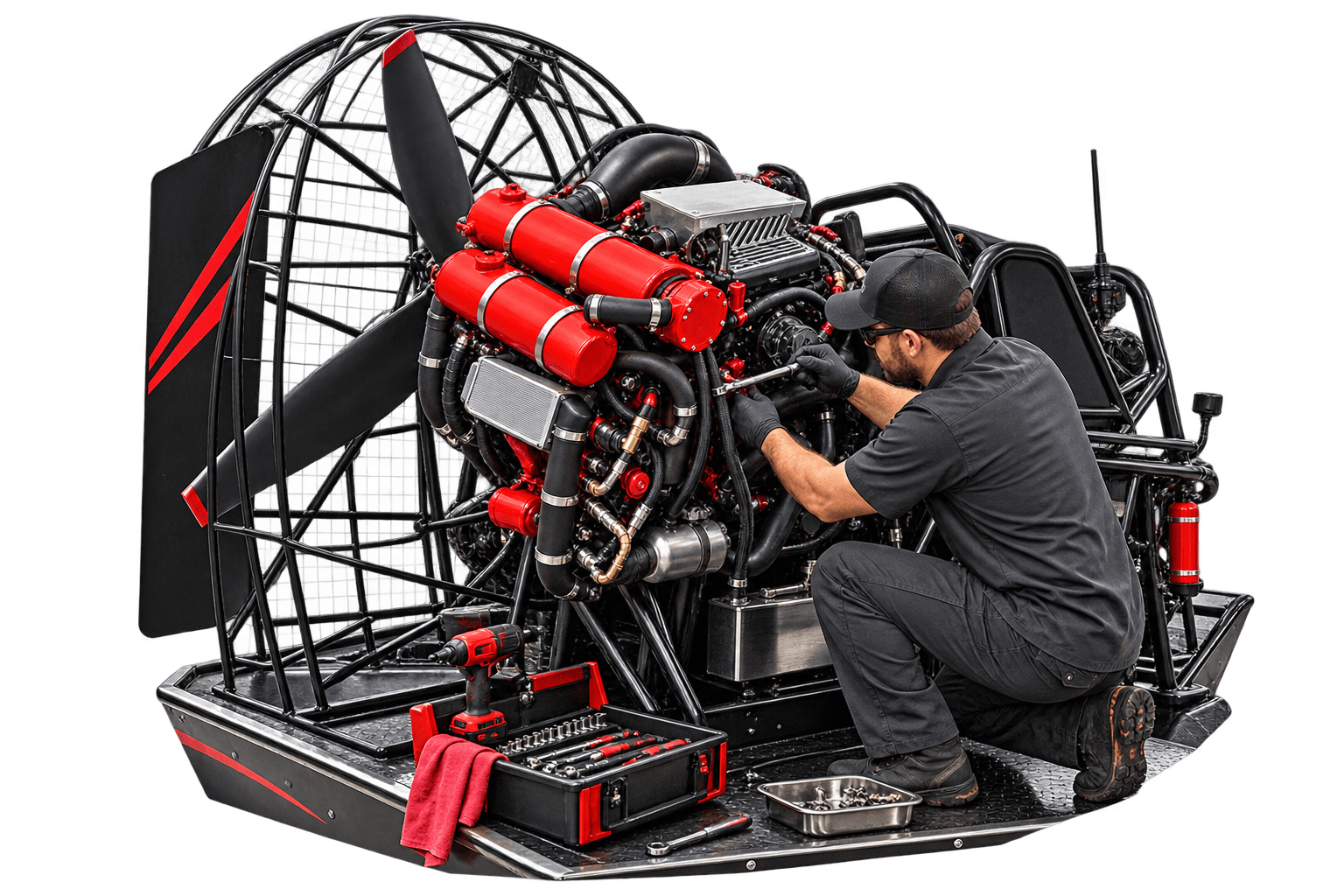
Weight is the one thing an airboat cannot hide.
A diesel package sits heavier over the stern. That moves the balance point, which changes draft, how the boat comes off a hill, and how it carries a load through a turn.
On a hull built for it, that is fine. On a small recreational hull it can be the difference between a boat that runs your water and one that does not.
What each one buys you
Gas
- Lower price on the same hull
- Lighter, so it runs shallower and turns freer
- 665 HP on tap, the most we build
- Parts and service anywhere you trailer it
- Burns more fuel per hour under load
Diesel
- Lower fuel burn, and the gap widens under load
- Strong low-end pull for weight and bad terrain
- More hours between rebuilds
- Fits a yard already stocking diesel
- Heavier, and more money up front
Three numbers, one answer
The price gap between the two packages
Ask for it on your hull with your rigging, because both move the number.Fuel saved per hour under your load
Any engine looks efficient at idle. Get the figure pushing the weight you carry.Your real hours per year
That is the years to break even. If it runs longer than you will own the boat, buy gas.What to run, by who you are
A season of weekends will never pay back the premium. Spend it on seating, lights and the right prop.
Heavy use in season and quiet the rest of the year. Worth running your hours before you decide.
Long shifts with crew and gear aboard, and a yard that already stocks diesel. The strongest case there is.
Boats that work daily under load, where fuel and downtime are line items somebody signs off on.
Questions we get in the shop
Is diesel faster?
No. Gas makes the higher peak horsepower, and our fastest package is the 665 HP LT4 Marine. What diesel gives you is pull at low RPM and lower fuel burn over long hours. A loaded diesel boat can feel stronger through bad terrain while still being slower on open water.
Do diesels last longer?
They usually run more hours between rebuilds, which matters on a boat logging heavy annual hours. On a recreational boat, both will outlast the owner’s interest in it. Maintenance history and rigging quality decide the life of an airboat more than fuel type does.
Can you convert gas to diesel?
Yes, but treat it as a rebuild. The extra weight moves the balance point, which pulls in the reduction, the prop, the mounts and often the rigging. It works well on some hulls. On others you get a better boat from a fresh gas package matched properly to what you already own.
What should a sheriff’s department run?
It depends on the mission and the hours, though agency boats are where the diesel case is strongest. We spec these boat by boat with the department, and we train the crews who run them. Call the shop and we will walk through it with you.
Tell us the hours. We will tell you the engine.
Building airboats in Vidor since 1997, for hunters, guides, agencies and industrial crews. Every package is installed and tuned in our own shop, and we repower all makes.